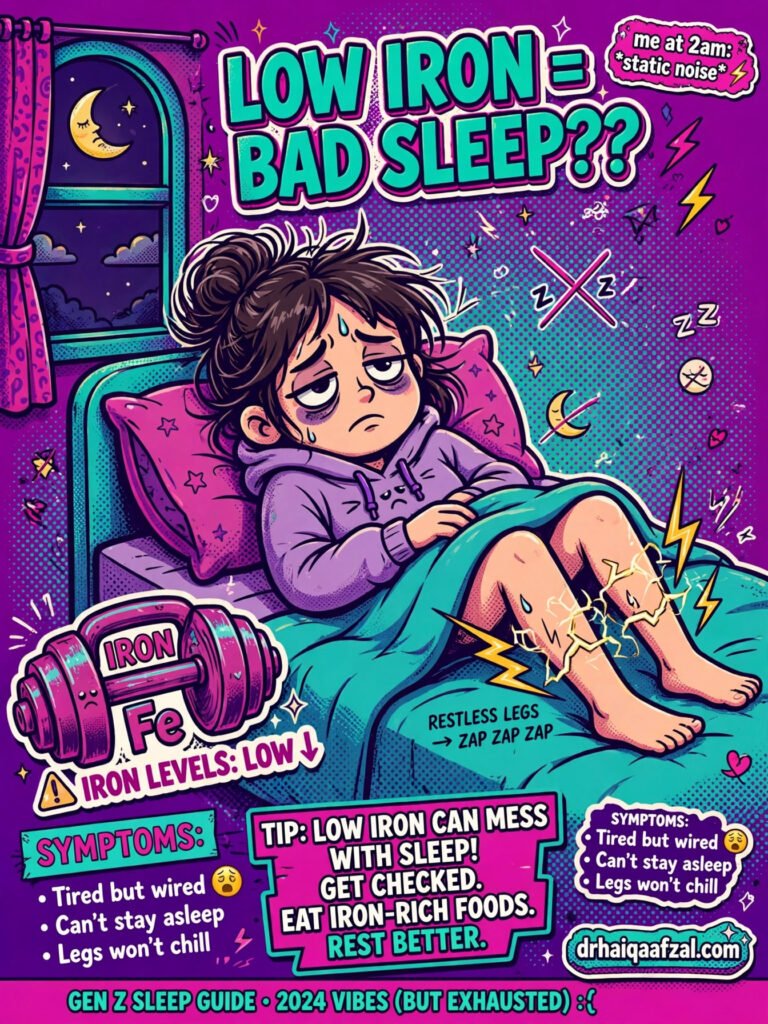
Poor sleep sends people down many rabbit holes, from blue light to blackout blinds, and a blood test is rarely on the list. Yet one of the most fixable causes of broken nights sits quietly in the blood: low iron. The link is not folklore. The NHS lists restless legs syndrome, one of the classic thieves of sleep, as a recognised symptom of iron deficiency anaemia. So does low iron affect sleep? Yes, most clearly through restless legs syndrome, and also through the fatigue that anaemia brings. The good news is that both are testable and treatable.
The short answer: Low iron can affect sleep, chiefly by causing or worsening restless legs syndrome: an irresistible urge to move the legs in the evening that delays sleep and fragments the night. Iron is needed for dopamine production in the brain, and low brain iron is a well-established driver of restless legs. Iron deficiency anaemia also causes daytime tiredness that people easily mistake for a sleep problem. A blood test, usually a full blood count and ferritin, settles the question, and correcting the deficiency with GP-prescribed treatment improves both the legs and the nights.
How low iron actually disrupts sleep
The clearest route is restless legs syndrome, often shortened to RLS. People with RLS describe a crawling, tingling or aching sensation deep in the legs that appears when they sit or lie down, usually in the evening. Moving the legs relieves it briefly, and lying still makes it worse. The result is predictable: sleep is delayed, the night is broken by getting up and walking about, and mornings arrive with the drowsiness of a sleepless night.
RLS is not the only sleep thief linked to iron, but it is the one with the strongest evidence. The NHS lists it among the less common symptoms of iron deficiency anaemia, and clinical guidelines take it seriously enough to build treatment around iron levels. What matters here is that iron’s role is central, not incidental. Iron is a cofactor for tyrosine hydroxylase, the rate-limiting enzyme in dopamine synthesis. When iron stores in the brain run low, dopamine production is impaired, and dopaminergic activity naturally dips in the evening. That combination creates the conditions for symptoms that emerge exactly when the person wants to sleep.
There is a second, simpler route. Iron deficiency anaemia causes tiredness and lack of energy, shortness of breath and palpitations, which leave people feeling drained all day. Daytime fatigue is easily read as “I sleep badly”, when the underlying problem is that the blood is not carrying oxygen efficiently. When the deficiency is corrected, people often report feeling rested for the first time in months, not because their sleep changed but because their days did.
Do you need anaemia for iron to affect your sleep?
No, and this is the point most people miss. You can have low iron without being anaemic, and it can still matter for sleep. The RLS connection is the proof: clinical guidelines recognise that patients with restless legs can have low iron stores in regions of the brain while their blood counts and even their blood iron levels look entirely normal. BMJ Best Practice states that iron treatment can be beneficial for restless legs even in the absence of anaemia or a systemic iron deficiency. Brain iron and blood iron are not the same measurement, which is why a person can have nightly leg symptoms that respond to iron despite never being told they are anaemic.
This also explains why the treatment threshold used for restless legs sits higher than the cut-off many labs use for general deficiency. Sleep medicine guidelines recommend considering iron treatment for RLS when serum ferritin is 75 micrograms per litre or below, or transferrin saturation is below 20 percent. That is notably above the standard lower limit of around 30 that labs use for the general population. A ferritin result your GP might call “normal” for most purposes can still be too low for restless legs, and this is a clinical judgement, not a do-it-yourself interpretation.
The signs that point to iron
No single symptom proves low iron, but a pattern does. The NHS lists the common symptoms of iron deficiency anaemia as tiredness and lack of energy, shortness of breath, noticeable heartbeats, paler than usual skin and headaches. Less common symptoms include tinnitus, a sore tongue, hair loss, pica, the craving for non-food items such as ice, mouth ulcers, spoon-shaped nails and restless legs syndrome. If your sleep problem comes with this cluster, particularly the leg symptoms in the evening, iron belongs on the suspect list.
The leg symptoms are the most specific. Simple night cramps, which strike as a sudden painful contraction, are different from restless legs, which is an urge to move rather than a cramp. Restless legs worsen with rest, improve with movement and follow an evening pattern. If that description fits, mention it specifically when you see your GP, because it changes which tests are worth doing.
Why women are most affected
Iron deficiency is far more common in women, and the numbers are not close. NICE guidelines estimate that around 3 percent of men and 8 percent of women have iron deficiency anaemia, a figure cited by Cambridge University Hospitals’ iron deficiency service. The main drivers are menstrual blood loss, pregnancy and diets low in iron-rich foods. Heavy periods are the single most common cause in women of reproductive age, which is why a sleep complaint in a woman with heavy bleeding should prompt a blood test, not just sleep hygiene advice. That connection is covered in more detail in this guide to why heavy periods cause iron deficiency.
Pregnancy deserves its own mention. Iron demand rises substantially in pregnancy, and restless legs are common in the third trimester, often easing after delivery. Pregnant women with nightly leg restlessness should have their iron checked rather than assuming it is an inevitable part of pregnancy.
The tests that settle it
Self-diagnosis by symptoms is unreliable, and iron is not something to supplement blindly. The NHS advice is straightforward: see your GP if you think you might have iron deficiency anaemia. The usual starting test is a full blood count, which shows whether the number of red blood cells is normal, alongside a ferritin measurement, which shows how much iron the body has in store.
Two caveats are worth knowing. First, ferritin can rise temporarily during illness or inflammation, so a normal reading does not always rule out low iron; the GP may check transferrin saturation alongside it for a fuller picture. Second, if restless legs are the main symptom, mention them explicitly, because the treatment threshold for RLS is higher than the general deficiency cut-off, and guidelines recommend iron studies, including ferritin and transferrin saturation, in all patients with clinically significant restless legs. Ideally the blood is drawn in the morning after an overnight fast.
What actually helps
Treat the deficiency, not just the symptom
Where a blood test confirms low iron, the NHS says iron tablets are usually recommended to replace what is missing, and are typically taken for about six months so the stores refill, not just until the symptoms ease. Side effects such as constipation, tummy pain, heartburn and darker stools are common, and taking the tablets with or soon after food can reduce them, though your GP’s instructions take priority. Your GP may arrange repeat blood tests over the following months to check that levels are recovering.
Just as important is finding and treating the cause, whether that is heavy periods, blood loss from the gut or a diet low in iron, so the deficiency does not simply return. For restless legs specifically, guidelines support iron replacement where ferritin is 75 micrograms per litre or below, with oral iron as the usual starting point and intravenous iron as a specialist option where oral treatment fails or cannot be tolerated.
Eat to support the treatment
Diet rarely fixes a genuine deficiency on its own, but it matters for recovery and prevention. Iron-rich foods include red meat, liver, beans, lentils, dark leafy greens, dried fruit and fortified cereals. Vitamin C improves iron absorption, which is why the NHS suggests drinking orange juice after taking a tablet. Tea and coffee with meals reduce absorption, so keep them apart from iron tablets. These are supporting measures, not substitutes for treatment.
Protect the sleep while the iron recovers
Correcting iron takes months, so it is worth managing the nights meanwhile. For restless legs, the standard guidance is to limit caffeine and alcohol, keep regular sleep hours and try gentle evening leg movement such as stretching or a warm bath. Reducing or timing caffeine also helps people whose sleep is broken by anaemia-related fatigue. This is a good moment to read the related questions already answered on this site: how many hours of sleep you need after a night shift and what the healthiest shift work schedule looks like both cover sleep recovery in detail, and whether night shifts affect lifespan puts long-term sleep disruption in perspective.
When to see your GP
Book an appointment if you have persistent tiredness with any of the iron deficiency symptoms, or if you have the evening leg restlessness described above. Mention restless legs by name if that is what you experience, because it guides the choice of blood tests. Seek advice sooner if you are pregnant, have noticed unusually heavy bleeding, black stools, or symptoms that are worsening quickly. Iron is also a mineral where more is not better: iron overload is a real condition, and supplements should follow a blood test and a GP’s recommendation, never a guess.
Frequently asked questions
Does low iron cause insomnia?
Low iron is not listed as a direct cause of insomnia in the way that anxiety or sleep apnoea are, but it causes restless legs syndrome, which produces insomnia-like nights: difficulty falling asleep and frequent awakenings. Correcting the deficiency often resolves the leg symptoms and the sleep with them. If your insomnia comes with evening leg restlessness, ask your GP about an iron check.
Can low iron make you tired even if you sleep well?
Yes. Iron deficiency anaemia reduces the blood’s ability to carry oxygen, which causes tiredness and lack of energy regardless of how many hours you sleep. Many people chase better sleep when the real deficit is in their blood. The full blood count and ferritin test distinguish the two.
What ferritin level is considered low for restless legs?
Clinical guidelines for restless legs recommend considering iron treatment when serum ferritin is 75 micrograms per litre or below, or transferrin saturation is below 20 percent. This threshold is higher than the general population deficiency cut-off, so a result that is “normal” on a standard lab report may still be low for restless legs. Interpretation is a clinical judgement for your doctor.
How long does it take for iron treatment to help sleep?
Restless legs symptoms can improve within weeks of starting effective iron treatment, but rebuilding iron stores typically takes months; the NHS says iron tablets are usually taken for about six months. Your GP may recheck blood levels after three to four months and then periodically until stores are replenished.
Should I take iron supplements without a blood test?
No. Iron overload is harmful, and the symptoms of low iron overlap with many other conditions, including thyroid problems and sleep apnoea, that iron will not help. See your GP for a blood test first; it is the only reliable way to know whether low iron is part of your picture.
Can low iron affect children’s sleep?
Iron deficiency is common in children, particularly toddlers and teenagers with restricted diets or heavy periods in older girls, and it can cause restless legs and poor sleep quality in children too. If a child is a restless sleeper with pale skin or poor appetite, mention iron to your GP rather than assuming it is behavioural.
Sources
- NHS. Iron deficiency anaemia: symptoms, diagnosis and treatment. nhs.uk/conditions/iron-deficiency-anaemia
- BMJ Best Practice. Restless legs syndrome: management approach. bestpractice.bmj.com
- Cambridge University Hospitals. Iron deficiency anaemia. cuh.nhs.uk (citing NICE guideline estimates)
- Whittington Health. Treatment of iron deficiency anaemia with intravenous iron: patient information. whittington.nhs.uk
This article is for general information only and is not medical advice. If you have concerns about fatigue, sleep or restless legs, see your GP, who can arrange the appropriate blood tests and treatment.